
Leadership For Lean Manufacturing
The Case for Leadership
The Case for Leadership
Lean Manufacturing Leadership is often the most important factor in success. The paradigm shift of Lean Manufacturing demands visionary leadership. Leadership is about influencing others to take actions and adopt behaviors that accomplish a goal or mission. This is a complex topic with many possible perspectives. In this series of articles, we have synthesized a view of leadership from several established perspectives.
Managers Versus Leaders
Leadership is quite different from management. The necessary qualities for it may lie deep inside the human psyche. But even leadership can be learned.
Leaders- establish new and radical visions. They bring vision to reality with shared values that gain commitment.
Managers- work within a system to maintain existing goals and direction. They generally use reward and punishment to gain compliance.
It is a paradox thatfirms with long periods of past success, such as the American automobile industry, have serious leadership difficulties when times change. During periods of success, management is highly valued and true leadership is often discouraged. When the external environment (markets, technology, social structure) changes the organization cannot adapt new visions to cope. This is one reason that large firms with successful histories have the most difficulty with Lean Manufacturing.
Leadership Style
One finds a wide range of personal characteristics and style among successful leaders. There is an equally wide range among failed leaders. It appears that style does not determine success or failure and this is true for leaders with formal authority.
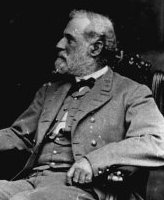
Peer leadership is another matter. Peer leaders have no official authority. They lead through casual mechanisms such as respect, knowledge, charisma and rapport. Peer leadership is increasingly important in today's informal, fluid organizations. For peer leadership, the quiet style of a Robert E. Lee is far more effective than the bombastic style of a Patton.
Charismatic Leadership
The Charismatic Leadership model provides some answers. Charismatic leaders in all fields and situations exhibit a common behavior pattern. They:
- Challenge The Status Quo
- Create A Compelling Vision
- Establish Shared Values
- Enable Others To Act
- Model The Way
- Encourage The Heart
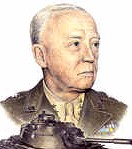
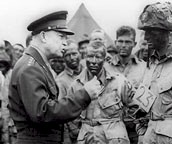
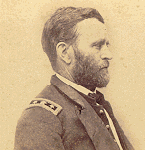
Charismatic leaders do these things constantly in large and small ways. Cumulatively, these actions change attitudes, responses and methodologies within the organization. Note the varied styles and personalities of these American military leaders. All were successful in somewhat similar military situations but all had radically different styles.
|
George S. Patton |
Dwight D. Eisenhower |
|
Ulysses S. Grant
|
|
More Information
This page is the first in a series. See the links below for other pages. At "Lessons From Twelve O'clock High" you can download a wonderful article on this paradigm by Major Attila Bognar of the U.S. Army.
Shakespeare used leadership as the theme for many of his best plays. "Shakespeare on Leadership" shows how King Henry V fits the Charismatic Model.
Learning From The Movies
Movies are a great way to learn about leadership. Just watching, however, will add little insight. This learning requires structure and active reflection. An upcoming web page will summarize the lessons from several great films. Our seminar "Team Leadership" uses clips from several movies as a learning tool.
■ ■ ■ ■ ■ ■ ■

|
The Strategos Guide To Value Stream and Process Mapping goes beyond symbols and arrows. In over 163 pages it tells the reader how to do it and what to do with it. |

The free newsletter of Lean strategy