
Lot Sizing & Lean Manufacturing Strategy
Strategic & Systemic Issues

In A Nutshell
Why lean works better with small lots and the effects of small lots on production and inventory.
Why Small Lots?
The Lean Manufacturing literature gives little guidance on lot sizing other than general statements. This series of papers examines the lot sizing problem in Lean Manufacturing. It offers a rational alternative to the slogans and edicts.
Small lot production (ideally one piece) is an important component of many Lean Manufacturing strategies. Lot size directly affects inventory and scheduling. Other effects are less obvious but equally important.
Small lots reduce variability in the system and smooth production. They enhance quality, simplify scheduling, reduce inventory, enable kanban and encourage continuous improvement.
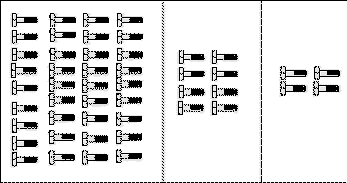
The effects of small lots differ somewhat between Make To Order (MTO) and Make To Stock (MTS) environments but they are important in either situation.
Production Linearity
Production linearity refers to the steadiness and repetitiveness of daily production output. As Henry Ford understood, efficiency and quality come from producing the same products, at the same rate, in the same way every day.
This chart shows the effect of large and small lots on one particular workcenter's production of a particular item.
A green line shows daily demand from the customer. It averages 50 units/day and does not vary more than about 20%. The black line shows the actual production if units are made in lots of 20 or about 0.4 days of demand. With this small lot size, required production tracks demand and even smoothes the demand a bit. Output is quite linear.

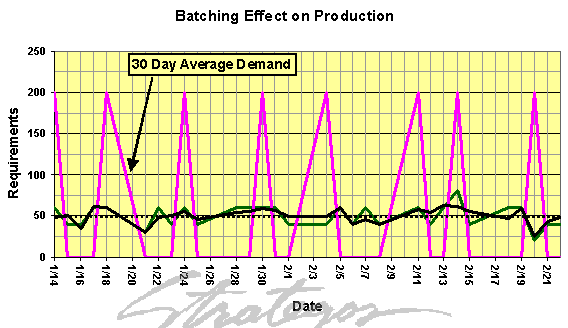
A lot size of 200 units is about 4.0 days of demand. The purple line shows production requirements. Here there are large, intermittent swings between 200 units and 0 units-- very non-linear.
This kind of pattern complicates scheduling, precludes the use of kanban and generates large inventories. The slightest glitch can cause stockouts.
Inventory
Batching has an even greater effect on inventory. This chart shows the theoretical minimum inventory on hand downstream of the workcenter. A lot size of 20 units generates an average inventory of 15 units.
A lot size of 200 generates an average inventory of 93 units with wide fluctuations. This is a 600% increase!
Actual inventory would be much larger than shown here because of the uncertainty of fluctuations, the difficulty of correcting a stockout and the need for coping with other contingencies.
the next page reviews the old Economic Lot Sizing (ELS) approach, its shortcomings and how to use it sensibly. Further pages bring in considerations from Theory of Constraints and show how to make rational and practical decisions. The final page in this series illustrates the effects of Setup Reduction and why it is so important.

■ ■ ■ ■ ■ ■ ■

|
The Strategos Guide To Value Stream and Process Mapping goes beyond symbols and arrows. In over 163 pages it tells the reader how to do it and what to do with it. |

The free newsletter of Lean strategy