
Balancing the Work In Workcells
Alternatives to "Line Balance" Algorithms
 Work balance within a manufacturing cell or work cell is a primary determinant of the cell's
efficiency and one of several workcell design issues. Work balance is a lot more involved than most people recognize. This page introduces the topic and the downloadable paper addresses these
issues in considerable detail.
Work balance within a manufacturing cell or work cell is a primary determinant of the cell's
efficiency and one of several workcell design issues. Work balance is a lot more involved than most people recognize. This page introduces the topic and the downloadable paper addresses these
issues in considerable detail.
Production Line Balance
Henry Ford's highly balanced assembly line has been the dominant production model for almost 80 years. But such lines have significant problems. Most short-cycle lines that appear to be balanced actually have significant balance losses that exceed 20%.
The Effects of Imbalance
Imbalance can produce several negative effects. Among these effects are:
|
|
Static and Dynamic Balance
Production lines can have perfect average or static balance and yet be highly unbalanced from cycle-to-cycle (dynamic balance). Understanding these factors is important when selecting balance methods.
People and Equipment
In Cellular Manufacturing it is important to divorce people from machines or workstations. This is often a difficult paradigm shift but it is necessary for three reasons:
1. The time required for a person at a given workstation may differ from the machine time.
2. The workstations in a work cell or production line rarely have perfect balance and therefore most workstations have idle periods.
3. People are more flexible than machines and can utilize balance methods that are unavailable for equipment.
Equipment Balance Methods
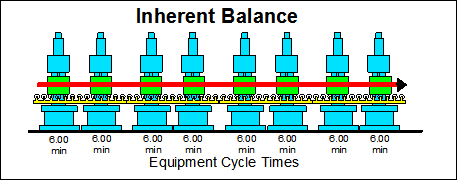
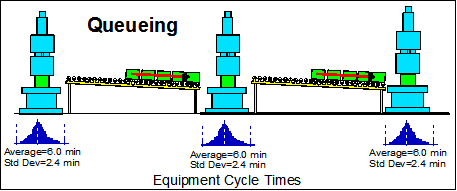
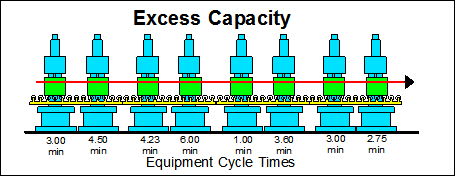
Balancing equipment is often unnecessary or even counterproductive. There are important advantages from excess equipment capacity in a work cell. The following methods are available for equipment balance:

People Balance Methods
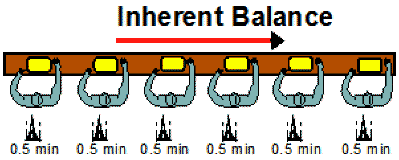
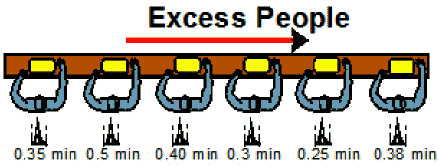
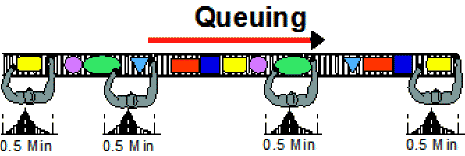
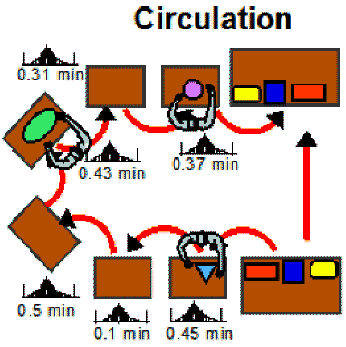
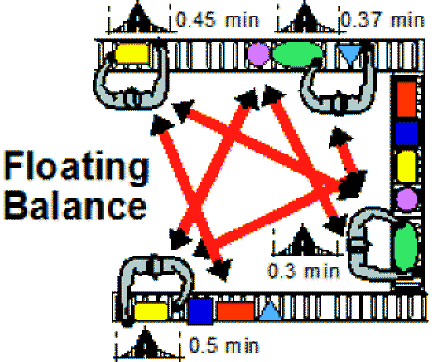
Balancing the work of people in a cell is critical. An idle person costs more than most idle machines. In addition, people perceive a work imbalance as unfair and this causes frustration and dissension in the work cell team. Here are the methods available for balancing people:
Reference
LEE, QUARTERMAN, "How to Balance work cells", Institute of Industrial Engineers, Proceedings, May 21-23, 2000
■ ■ ■ ■ ■ ■ ■

|
The Strategos Guide To Value Stream and Process Mapping goes beyond symbols and arrows. In over 163 pages it tells the reader how to do it and what to do with it. |

The free newsletter of Lean strategy