Pioneers of Lean- Ohno & Shingo
An Interview With Norman Bodek
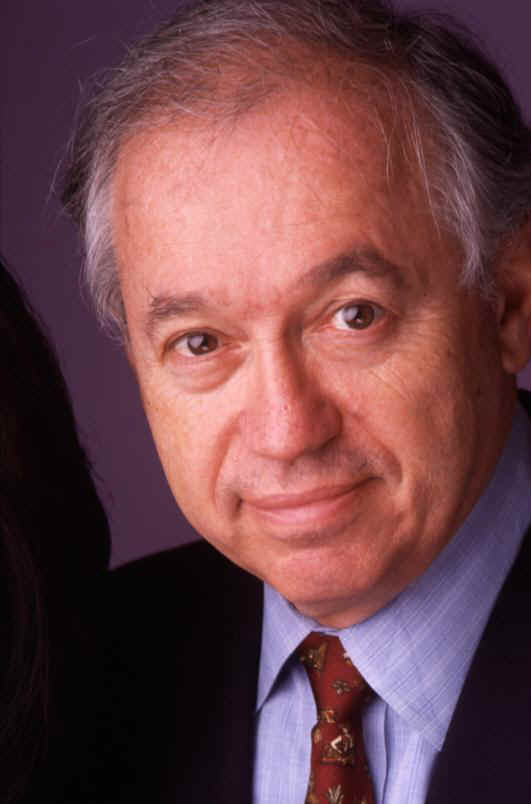 Norman Bodek was an author and publisher who was among the first to bring Japanese management
techniques to the West. His new book, Kaikaku, weaves together his own story with fascinating profiles of key personalities such as
Ohno and Shingo along with the principles of Lean.
Norman Bodek was an author and publisher who was among the first to bring Japanese management
techniques to the West. His new book, Kaikaku, weaves together his own story with fascinating profiles of key personalities such as
Ohno and Shingo along with the principles of Lean.
In this interview, Norman gives us insight to these topics and a preview of his book.
Enthusiastic, optimistic and a dynamic facilitator, Norman Bodek has been instrumental in bringing Japanese management techniques to mainstream American companies. He has led 50 industrial missions to Japan, knew Taichii Ohno and was a personal friend of Shigeo Shingo. Norman is a Co-founder of the Shingo Prize.
Strategos: Who really developed the Toyota Production System?
Bodek: I once asked Dr. Shigeo Shingo, "Who really discovered Lean, you or Taiichi Ohno?" Shingo looked at me and quickly said, "I did, for I was Ohno's teacher." At a later time I asked an ex-Toyota group manager, Chihiro Nakao, who worked with both Shingo and Ohno a similar question, "Who really discovered Lean, Shingo or Ohno?" His answer was, "Which came first the chicken or the egg?"
Of course, both Dr. Shingo and Mr. Ohno both played significant roles and it was through their conceptual genius that Lean was born.
Strategos: What were the key personality characteristics that Shingo and Ohno brought together that provided so much success?
Bodek: They were both like tigers, fiercely aggressive, neither would accept the idea that something could not be done. They gave you the concept and told you to do it.
Ohno would simply say, "I want you to change this warehouse into a machine shop and I want everyone working there to be retrained. I will come back in one year to see it done." He did not tell them how to do it. Ohno had the power, as chairman of Toyota Gosei at the time, and was "ruthless." You had very little choice with him.
Dr. Shingo was also a tiger, but a gentle tiger. He was absolutely brilliant, probably the greatest manufacturing genius of our time, able to solve every manufacturing problem presented to him.
His way was different. He was a teacher. He would help you by asking you questions and encouraging you to experiment. He knew you had the answers within you. He would teach you about waste and give you guidance on how to eliminate that waste.
Strategos: How did Ohno and Shingo arrive at this particular set of elements for their system?
Bodek: Ohno said he learned from three people: Mr. Toyoda who had visited America earlier, Dr. Shingo who was Toyota's primary consultant and teacher, and Henry Ford. Ford was able to build a car in 4 days from iron ore coming out of the ground to the finished product. Ohno then went and found a copy of Henry Ford's book "Today and Tomorrow," and said, "If Ford can do it so can we."
Dr. Shingo was an industrial engineer who studied carefully Frederick Taylor and Frank Gilbreth learning about time and motion studies.
His big breakthrough was to realize the difference between process and operations, process being the total flow of manufacturing from the customer's order to the finished product and operations, a series of machines. By focusing on process he was able to teach us how to smooth out our operations to be more efficient.
Strategos: Would you tell us about Dr. Shingo?
Bodek: To attain the goal of continuous improvement Shingo was relentless in stimulating people to change for the better. "Can't be done "and " impossible," were not part of his vocabulary. He knew there were many ways to solve problems, like there were many paths to reach the top of Mt. Fuji.
Whenever Dr. Shingo left a client he gave them homework. Just like at school we need to learn and work afterwards in our quest for competitive excellence. Dr. Shingo expected his clients to have the work completed before he came back a month later. He didn't want them to waste time and he didn't want them to waste his time.
Nakao, the principle in Shingijutsu Consulting who worked with Dr. Shingo said, "I was always afraid of Dr. Shingo. He would always leave me homework and he expected me to do it." Dr. Shingo's parting works were, "Do it!"
Strategos: Who was the most colorful personality?
Bodek: Dr. Shingo was the most colorful and the most devoted to helping industry become more efficient. He worked into his eighties; never retired. He knew the increased wealth that would come to the world from the Toyota Production System.
One day he was explaining Baka-yoke, fool-proofing devices, created and implemented by workers on the factory floor. A young woman started to cry. "Why are you crying?" He asked. "Because I am not a fool," she answered. "I am truly sorry." And at that exact moment he changed the name from Baka-yoke to Poka-yoke, mistake-proofing devices.
Strategos: Not everyone makes cars. How did Shingo approach other industries?
Bodek: Every industry has waste. Every industry can change and improve. Lean applies to hospitals, call centers, hotels, everyone who wants to be more competitive.
Shigeo Shingo Career Highlights
 Shigeo Shingo was born in 1909 at Saga City, Japan where he attended the Saga Technical High
School. After graduation from Yamanashi Technical College in 1930 he went to work for the Taipei
Railway Company.
Shigeo Shingo was born in 1909 at Saga City, Japan where he attended the Saga Technical High
School. After graduation from Yamanashi Technical College in 1930 he went to work for the Taipei
Railway Company.
In 1943 shingo was transferred to the Amano Manufacturing Plant in Yokohama. As Manufacturing Section Chief, he raised productivity 100%. Shingo worked for several manufacturers in 1945 and 1946 and also began a long association with the Japanese Management Association (JMA).
From 1946-1954 Shingo had many assignments, delivered several important papers and crystallized his ideas on process and plant layout. He also applied Statistical Process Control.
In 1955, Dr. Shingo began another long association, this time with Toyota. In addition to his many consulting assignments in other industries. It is during this period that he first started work on setups by doubling the output of an engine bed planer at Mitsubishi's shipyard.
In 1959, Dr. Shingo left JMA to start his own consulting company. During the early 1960's, as an outgrowth of work with Matsushita, he developed his concepts of "Mistake-Proofing."
In 1969, SMED was originated when he cut the setup time on a 1000 ton press at Toyota from 4.0 hours to 3.0 minutes. During the 1970's, Shingo traveled in Europe and North America on many lectures, visits and assignments. He began to see Toyota's efforts as an integrated system and began to assist several U.S. and European firms in implementation.
Dr. Shigeo Shingo has written 14 major books and hundreds of important papers on manufacturing. The Shingo Prize is awarded for excellence in manufacturing as a tribute to Dr. Shingo and his lifelong work. He died in 1990.
Strategos: What was Ohno like?
Bodek: Well, Ohno had a reputation of creating fear in others. He was often called "ruthless" in his desire to drive out waste from the Toyota system.
One day Ohno walked into one of the large warehouses at Toyota Gosei and said to the staff of managers around him, "Get rid of this warehouse and in one year I will come back and look! I want to see this warehouse made into a machine shop and I want to see everyone trained as machinists." And sure enough, one year later that building became a machine shop and everyone had been retrained.
Ohno did not tell then how to do it. He just demanded that they do it. Ohno knew the economic benefits to Lean, knew it wasn't easy to bring change, and was forceful in bringing it forward.
Another time I was standing inside a factory near Tokyo, in front of a newly purchased automated delivery system. The system allowed an operator to pick out the necessary parts to be delivered to the assembly line. It was impressive to see the operator and her proficiency using the automated system fulfilling orders.
A former assistant to Mr. Ohno was standing with a group of the company's managers and he said to me, "Norman, what would Ohno have said about this automated warehouse?" I said, without thinking, Ohno would have said, "Get rid of it." All the managers looked shocked. I am sure their minds were buzzing, ?How can we get rid of it?"
Strategos: Ohno seems demanding, arbitrary and difficult. Yet, employee participation is a major source of Toyota's strength. How do you explain the apparent paradox?
Bodek: From what I was told, Ohno was both ruthless and relentless. Toyota needed that kind of energy to go from producing junky cars in 1960 to world's richest automotive company. Toyota was rough on all employees and on all of their suppliers but an employee has never been laid off (no downsizing), a supplier has never gone bankrupt (in fact, each supplier is a leader in their field), and Toyota is able to open new plants in America while we go to China. Toyota also invests in their employees. They want each one to learn and grow.
Taiichi Ohno Career Highlights
 Taiichi
Ohno was born in Manchuria, China in 1912 and graduated from Nagoya Institute of Technology. He
joined Toyota in 1932 and for about twenty years worked his way up in the firm.
Taiichi
Ohno was born in Manchuria, China in 1912 and graduated from Nagoya Institute of Technology. He
joined Toyota in 1932 and for about twenty years worked his way up in the firm.
In the 1940's and early 1950's, Ohno was the assembly manager for Toyota and developed many improvements that eventually became the Toyota Production System. Toyota was verging on bankruptcy during much of this period and could not afford major investments in new equipment or massive inventories.
The 1950's also saw the beginning of a long collaboration with Shigeo Shingo and the refinement of their earlier efforts into an integrated Manufacturing Strategy.
Ohno's career accelerated as a result of his success as Assembly Shop Manager and he became an executive Vice President in 1975.
In the early 1980's, Ohno retired from Toyota and was president of Toyota Gosei, a Toyota subsidiary and supplier.
Taiicho Ohno died in Toyota City in 1990.
■ ■ ■ ■ ■ ■ ■
|
The Strategos Guide To Value Stream and Process Mapping goes beyond symbols and arrows. In over 163 pages it tells the reader how to do it and what to do with it. |

The free newsletter of Lean strategy