
Planning A Lean Implementation
Lean Implementation
Imitation or Innovation
Implementation of Lean Manufacturing is a rather murky subject. Most firms stumble through the implementation with trial and error. Others rely on endless Kaizen events. Some believe that Value Stream Mapping is all that is necessary. There is a dearth of information and some of what is available is misleading or impractical. For example, one published approach emphasizes phases of:
1. Stability
2. Continuous Flow
3. Standardized Work
4. Pull Systems
5. Level Production
6. Continuous Improvement
These phases of lean are supposed to roll through the entire plant one after another like tsunamis. For most firms this is unrealistic. It ignores the interactions and systemic nature of Lean Manufacturing.
This is what Barry Richmond calls "List Thinking." List thinking is pervasive. Indeed, we have our own list of "Core Disciplines" on our "Lean Manufacturing Principles page." "Do these things [list] and everything will be OK."
Imagine a physician with a list of the top twenty drugs. He prescribes the same list to every patient, regardless of symptoms. The thought does not inspire confidence and the approach is unlikely to work on a complex system like the human body-mind. Nor will it work for a factory.
List thinking is especially problematic when implementing. All the elements in the Laundry List at right have value in some situations. However, the list gives no guidance for priorities, precedence or impact. Indeed, it cannot because each factory and situation is unique.
Examining this topic strategically and systemically raises several questions:
- Do we need the entire list of "Tools and Techniques"?
- If not, which do we employ?
- Which elements come first?
- Do we implement Lean Manufacturing company-wide or in focused areas?
- How does Kaizen fit into the picture?
- How detailed should the plans be?
- How long will it take?
- How do we know when we are really Lean?
This and subsequent pages examine these issues and address the questions. We start first with an appropriate "Mental Model" to structure our thinking and build a frame of reference.
Another key to effective planning is to identify appropriate phases. We suggest:
I. Core Disciplines
II. Consolidation
III. Continuous Improvement
The initial challenge is to plan for Phase I. This starts with anassessment. Then the appropriate "core disciplines" are selected and prioritized. Strategies are developed and project plans worked out.
We urge you to reflect on these issues and the "Mental Model". Our additional pages detail a procedure to develop a Lean Manufacturing Implementation Strategy and an action plan.

List Thinking In Action
"I don't know what your problem is but one of this medications should cure it.
Lean Laundry List
- Total Quality
- Teams
- Rapid Setup (SMED)
- Kanban
- Metrics & Measurements
- Mixed Model Production
- Value Stream Mapping
- Process Mapping
- Work Balancing
- 5S
- Autonomation
- Pokayoke
- Jidoka
- Elimination of Waste
- Total Productive Maintenance
- Continuous Flow
- One Piece Flow
- Standard Work
- Visual Management
- In Station Process Quality
- Level Production
- Takt Time
- Point of Use Storage

■ ■ ■ ■ ■ ■ ■
|
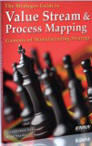
The Strategos Guide To Value Stream and Process Mapping goes beyond symbols and arrows. In over 163 pages it tells the reader how to do it and what to do with it. |

The free newsletter of Lean strategy