Kaizen- What Does It Mean?
Origin & Definitions of Kaizen
Origins and Definition of Kaizen
 In the U.S. kaizen is often synonymous with "Kaizen Blitz" or
"Kaizen Event." Such events rapidly implement
workcells, improve setups or streamline processes. However, a better Japanese word for this
activity is kaikaku
In the U.S. kaizen is often synonymous with "Kaizen Blitz" or
"Kaizen Event." Such events rapidly implement
workcells, improve setups or streamline processes. However, a better Japanese word for this
activity is kaikaku
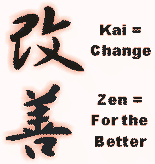
In Japanese, the definition of Kaizen is "improvement" and particularly, "Continuous Improvement"-- slow, incremental but constant. Norman Bodek explains this and translates it as "Quick & Easy Kaizen".
Taiichi Ohno and Shigeo Shingo developed both kaizen versions at Toyota. They are important tools for Lean Manufacturing, the Toyota Production System (TPS), Just In Time (JIT) and other effective manufacturing strategies.
Large-Scale Vs. Small-Scale Improvement
Large scale improvement is attractive. It promises quantum jumps in productivity, quality and effectiveness. However, it is difficult to implement because it affects many areas, people and processes. The design must be near-perfect because failure courts disaster. The risks and difficulties work against large-scale improvements.
Small-scale improvements are easier and faster. The risks are low because they generally have limited effect. However, the accumulated effect is often greater than a single large improvement. The Kaizen Blitz is a localized, smaller scale improvement and Mini-Kaizen are very small-scale improvements.
The Kaizen Blitz
 The Blitz or Event is a focused, intense,
short-term project to improve a process. Substantial resources- Engineering, Maintenance,
Cell Operators, and others are available for immediate deployment.
The Blitz or Event is a focused, intense,
short-term project to improve a process. Substantial resources- Engineering, Maintenance,
Cell Operators, and others are available for immediate deployment.
An event usually includes training followed by analysis, design, and re-arrangement of a product line or area. A consultant often orchestrates. The Event normally takes 2-10 days. The results are immediate, dramatic and satisfying.
Mini Kaizen

Before the recent popularity of the Blitz, kaizen meant "Continuous Improvement." This is the slow accumulation of many small developments in processes and quality that, over 50 years, has helped make Toyota the lowest cost and highest quality automobile company in the world. Let's call these improvements "Mini Kaizen."
Mini Kaizen is part of corporate culture. It requires both conscious and sub-conscious thinking about improvements day by day and minute by minute on the part of all employees. It also requires that these same employees possess the skills for this type of thinking.
The mini variation is far more difficult to keep up and takes much longer for results than a blitz. But, as Toyota has demonstrated, it offers a more sustained competitive advantage.
■ ■ ■ ■ ■ ■ ■
|
The Strategos Guide To Value Stream and Process Mapping goes beyond symbols and arrows. In over 163 pages it tells the reader how to do it and what to do with it. |

The free newsletter of Lean strategy