
Designing Workcells
Cellular Manufacturing
Workcells and Cellular Manufacturing are at the heart of Lean Manufacturing. Their benefits are many and varied. They increase productivity and quality. Cells simplify material flow, management and even accounting systems.
Workcells appear simple. But beneath this deceptive simplicity are sophisticated Socio-Technical Systems. Proper functioning depends on subtle interactions of people and equipment. Each element must fit with the others in a smoothly functioning, self-regulating and self-improving operation.
Proper design of manufacturing workcells is an engineering problem. Like any other engineering design, it proceeds through a logical sequence of steps. At each step, the designers make compromises between conflicting requirements or technical limitations. Doing it well requires a deep and profound knowledge of the elements of a workcell, their functions, and their interactions.
The links below take you to the detail steps of cell design. An experienced designer performs many of these steps informally or just mentally. The process is not as complex or lengthy as the charts indicate. However, failure to perform a step results in design by accident, a risky proposition.
You can find a complete explanation of this in Mr. Lee's book, "Facilities and Workplace Design - An Illustrated Guide."
Four Tasks of Cell Design
| Step | Description | Key Issues |
|
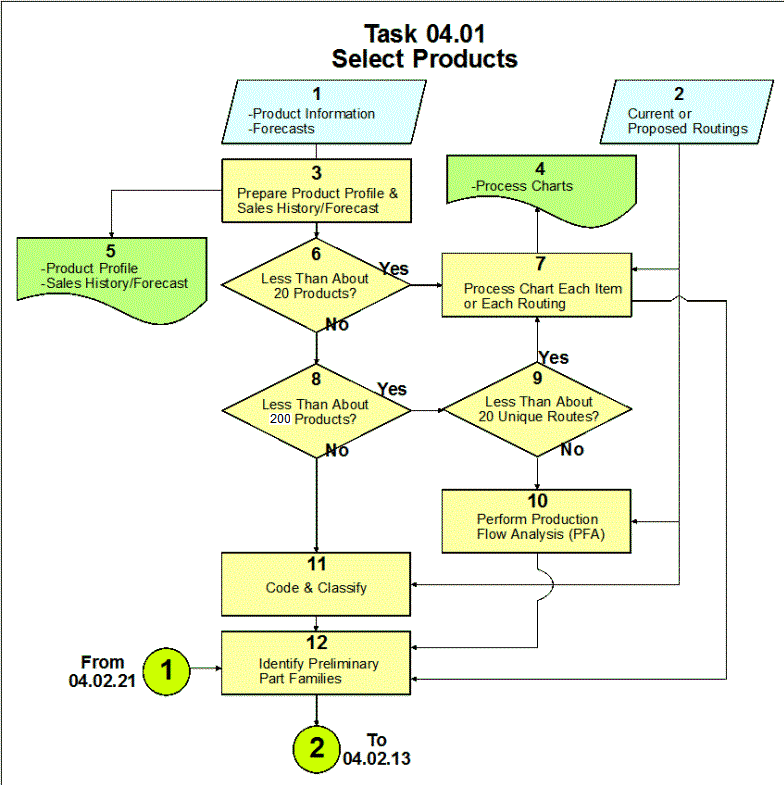
Select The Products |
The goal of product selection is to find compatible families of products that a group of machines can process without undo changeovers or other difficulties. Many difficulties result from attempting too much variety. Important tools are Process Mapping and Group Technology. |
Which products belong together in a cell? Should we have reserve capacity? What is the design production rate? |
|
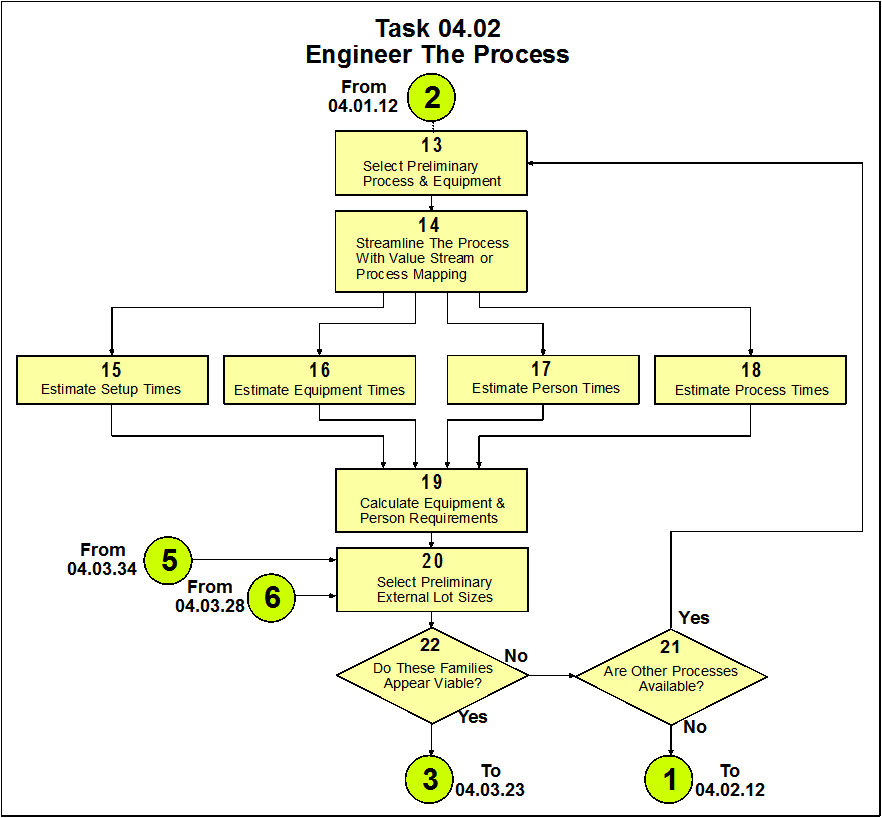
Engineer The Process |
Engineering the process requires a deep understanding of every process event as well as the times required for setup, personnel activities and machine cycles. From this we calculate the number of people required and the number of machines or workstations. |
What process steps do we need? What is the best sequence of steps? What equipment should we employ? How much equipment of each type? How many people do we need? What lot size is appropriate? |
|
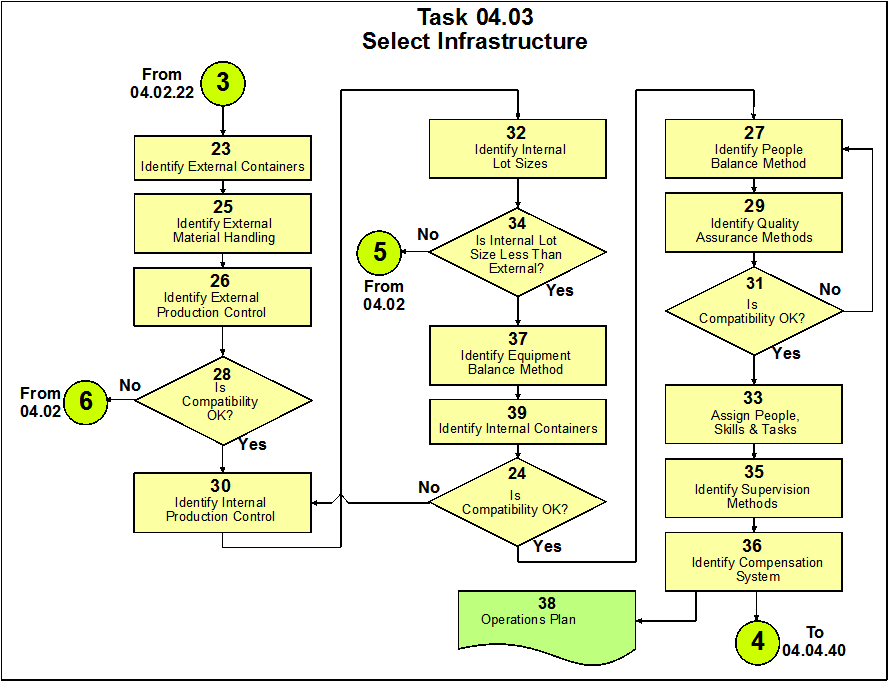
Define The Infra-structure |
Infrastructural elements support the process but do not touch the product. Infrastructure is intangible and cell designs often fail due to lack of awareness about it. |
What methods for material handling? How do we balance the workload? How much Work In Process? How do we schedule production? How do we motivate people? How do we assure quality? |
|
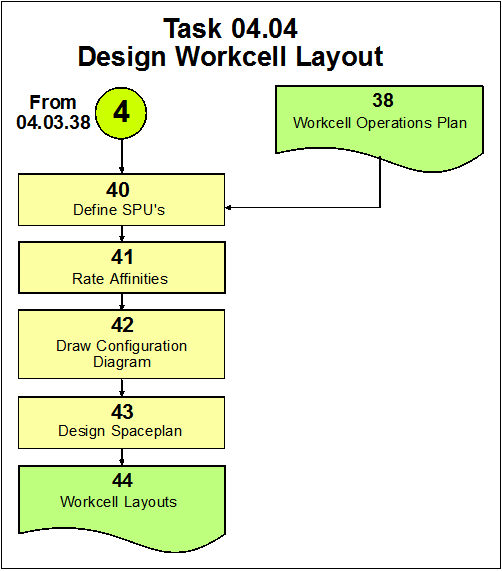
Layout The Cell |
The fourth task in workcell design is the physical layout. This is often straightforward if the previous tasks have been done thoughtfully. The Task Procedure diagrams can often be simplified. In many cases you may start with the process chart and move directly to a layout. |
What is the best physical arrangement? How do we handle external constraints? How do we fit into the macro layout? |


■ ■ ■ ■ ■ ■ ■

|
The Strategos Guide To Value Stream and Process Mapping goes beyond symbols and arrows. In over 163 pages it tells the reader how to do it and what to do with it. |

The free newsletter of Lean strategy